Water rates keep climbing, and a natural lawn in our climate is a part-time job with a monthly bill. Quality artificial turf gives you the green without the mowing, watering, or brown patches — and modern products look nothing like the plastic carpet of a decade ago.
Turf quality is real, but installation quality is everything: excavation, compacted base, proper drainage, seam work you can’t find on your knees, and infill matched to how you’ll actually use the space.
What we install
- Full front-yard conversions — the biggest water saving, and the one most likely to need HOA sign-off
- Backyard lawns and partial lawn replacement
- Pet areas and side-yard dog runs — pet-rated systems with odour-control infill
- Backyard putting greens with contours and fringe
- Play areas over soft-fall padding
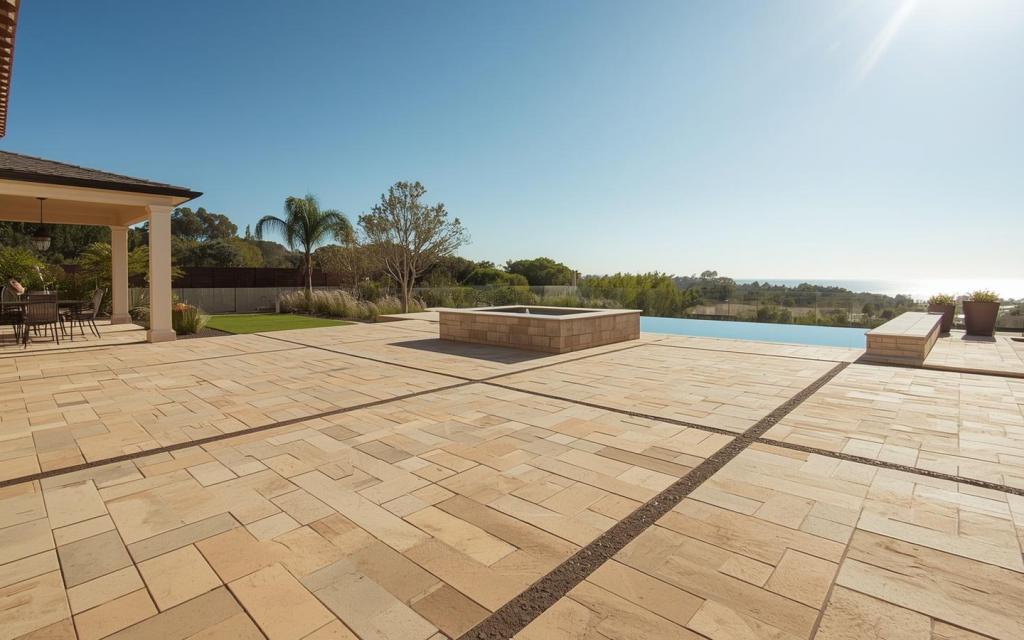
- Turf-and-paver combinations — turf ribbons between paver pads or concrete bands
- Rooftop decks, balconies and small courtyards
We install lead-free, pet-rated products. Quality turf typically carries a manufacturer warranty in the fifteen-year range and realistically looks good for fifteen to twenty years with basic care.
How to read a turf spec
Samples all feel nice in the showroom. These are the numbers that actually predict how a lawn will look in year five:
- Face weight — ounces of yarn per square yard. The single best proxy for density and durability. A light face weight is where cheap turf gives itself away, because it mats down and shows backing in traffic lanes.
- Pile height — taller is not better. Long pile in a high-traffic area lies flat and looks tired. Shorter, denser turf holds its posture far better; long pile belongs in low-traffic decorative areas.
- Yarn material — polyethylene is the standard for lawns: soft, natural-looking, good resilience. Nylon is stiffer and more heat-tolerant, which is why it’s used for putting surfaces. Polypropylene is the cheapest and the least durable underfoot.
- Blade shape — the cross-section matters more than people expect. Shaped blades with a spine stand up under load; flat ribbon blades fold over.
- Thatch layer — the curly brown fibres near the base. They add realism and help the blades stand.
- Backing and drainage — perforated backing with adequate hole spacing, plus a backing that won’t delaminate in full sun.
Infill is not an afterthought
Infill does the structural work: it weighs the turf down, holds the blades upright, and protects the backing from UV. Skimping on it is the most common corner cut in a cheap installation, and it shows within a season as a lawn that lies flat and wrinkles.
- Rounded silica sand — the workhorse for ordinary lawns.
- Antimicrobial coated sand — a coated silica that resists bacterial growth. This is what we use in pet areas.
- Zeolite — a naturally porous mineral that captures ammonia from pet urine and releases it when rinsed. Genuinely effective on odour, and worth the premium in a dog run.
- Crumb rubber — resilient and used under play equipment, though it holds heat more than mineral infills.
The installation, step by step
- Remove the existing lawn and excavate several inches — enough for base plus turf thickness, so the finished surface sits flush with adjacent hardscape rather than proud of it.
- Grade for drainage. Water has to leave, and it has to leave somewhere deliberate — not toward the house.
- Base material, compacted in lifts. A permeable aggregate base, compacted properly. This is what keeps the lawn flat for a decade.
- Weed barrier over the compacted base.
- Roll out and acclimate the turf, letting it relax before cutting so it doesn’t shrink back at the seams.
- Seams. The craft step. Blade direction has to run consistently across a seam or the join catches the light and becomes permanently visible from the house.
- Perimeter fastening — nailed or anchored at the edges, with bender board or hardscape holding the boundary.
- Infill, brushed in — applied at the specified rate and power-brushed so it settles to the base of the blades rather than sitting on top.
On a compacted-clay lot, drainage through the base is the thing to get right. Turf itself drains freely through its perforations; if the base beneath it holds water, you get a soft, smelly lawn regardless of how good the product was.
Turf for dogs
Full detail on odour control, base material, infill and dog runs is on our pet turf page. Dogs are the most common reason people call about turf, and the most common reason a bad installation fails. Urine drains through the turf into the base, so the base has to be free-draining and the infill has to manage ammonia — that’s zeolite or a coated antimicrobial sand, not plain silica. Some installations add a dedicated drainage layer or pad beneath the turf in concentrated areas.
Practically: solid waste picks up off the surface, and the area wants an occasional hose rinse to move ammonia through the infill. Dogs don’t dig through properly fastened turf, and they can’t wear a bare patch into it the way they do a real lawn — which for many households is the entire point. A denser, shorter pile holds up best in a run.
Putting greens
Full detail on base construction, speed, contours and cups is on our putting greens page. A putting surface is a different product and a different build: short, dense nylon pile, a finer and more heavily compacted base to get a true roll, cups set properly, and contours shaped into the base rather than draped over existing ground. Speed comes from the base and the brushing, not the turf alone. A fringe collar of taller lawn turf around the green is what makes it read as a green rather than a carpet.
Heat, and being honest about it
Artificial turf in direct afternoon sun gets hotter than natural grass. Anyone who tells you otherwise is selling. What reduces it: lighter-coloured yarn and infill rather than dark, mineral infill rather than crumb rubber, and shade — from a tree, a patio cover, or the house itself in the afternoon. A quick rinse drops the surface temperature immediately. In practice this matters most for a west-facing dog run with no shade, and barely at all for a north-facing backyard.
What drives the cost
- Square footage — larger areas are cheaper per square foot.
- Turf grade — face weight and yarn type are the biggest material variable, and the gap between entry-level and premium is wide.
- Demolition and disposal — removing sod, roots or an old slab, and hauling it away.
- Access — base material and spoil moved by wheelbarrow through a side gate instead of by machine.
- Shape complexity — curves, tree surrounds and narrow strips generate offcut waste, because turf comes in fixed-width rolls and blade direction has to stay consistent.
- Infill choice — zeolite and coated antimicrobial infills cost more than plain silica.
- Drainage work — added drains or a dry well where water has nowhere to go.
- Putting greens and play padding — both are premium builds, not lawn spec.
Water agencies in the region have at times offered turf-replacement or landscape rebates. Programmes and eligibility change, so check your own water district’s current offering rather than assuming — it’s worth ten minutes before you commit.
Maintenance
Far less than a lawn, not zero. Cross-brush traffic lanes occasionally to stand the blades back up — this one habit does more for how a turf lawn ages than anything else. Rinse pet areas. Blow or rake leaves off rather than letting organic matter break down into the infill, because that’s what eventually lets weeds germinate on the surface. Top up infill in heavy-traffic areas every few years. Weeds, when they appear, almost always come in at the edges or from windblown seed sitting in debris, not up through the barrier.
Common questions
How long does turf last?
Quality turf carries manufacturer warranties in the fifteen-year range and realistically looks great for fifteen to twenty years with basic care. The installation usually outlives the homeowner’s taste in it.
Is it safe for pets and kids?
Yes — we install lead-free, pet-rated products, with infill options designed for odour control and cooler surface temperatures. For play areas we install over soft-fall padding.
Will it look fake?
The giveaways are uniform colour, visible seams and a flat sheen. Good products use multiple yarn colours plus a brown thatch layer, and good installation hides seams and keeps blade direction consistent. The other giveaway is pile that’s too long for the traffic it gets, which mats and looks obviously synthetic.
Can turf go over an existing concrete patio?
Yes, over a sound slab that drains, usually with a pad underneath for comfort and drainage. It’s a common fix for a slab that’s structurally fine but ugly.
Does my HOA have to approve it?
Often, for front yards. Many associations now permit or encourage turf for water conservation but still specify product quality and appearance. Check before ordering material, not after.
How much water will I actually save?
Irrigation is typically the largest share of residential water use in a climate like ours, and a turf lawn removes essentially all of it for that area. The saving scales directly with how much lawn you replace, which is why full front-yard conversions pay back fastest.
What is turf infill and which type is best for San Diego?
Infill is the granular material brushed into artificial turf after installation. It weighs the turf down, keeps the blades standing up and protects the backing. Plain silica sand is the standard. Acrylic-coated sand and zeolite-based infills stay cooler and control odor, which makes them the better choice for pet areas and sunny San Diego yards. Crumb rubber is not something we use in residential lawns.
How do you keep artificial turf cool in summer?
Turf does run hotter than natural grass on a sunny afternoon. The practical remedies are lighter, lower-density turf colors, a cooling infill, a quick rinse with the hose before use, and shade from a patio cover, pergola or tree. We also lay out turf so the areas people and pets use most get afternoon shade when the yard allows it.
Does artificial turf drain well in heavy rain?
Quality turf has a perforated backing that drains many inches of water per hour, far more than any San Diego storm delivers. The base under it, three to four inches of compacted, permeable aggregate, carries that water away. The turf itself is rarely the problem; a poorly graded base that traps water under the turf is. That is why grading and base preparation take up most of an installation.
What goes under artificial turf?
The soil is excavated, graded for drainage and compacted, then a permeable base of crushed rock or decomposed granite is laid, compacted and screeded smooth. A weed barrier is optional and depends on the site. The turf is stretched over the base, seamed, secured at the edges with nails or a bender board, and infilled. The finished surface should be firm underfoot with no soft spots or visible seams.
Can artificial turf be installed on a slope?
Yes, and it is a good solution for slopes that are hard to mow or irrigate. The base is compacted and pinned, seams are run with the slope rather than across it, and the edges are anchored more heavily. On steeper grades we sometimes terrace or use a low wall so the turf sits on manageable planes. Turf on a slope also stops the erosion that bare or patchy grass allows.
How do you clean and maintain artificial turf?
Rinse it with the hose to clear dust and pollen, remove leaves with a plastic rake or blower, and brush high-traffic areas a few times a year to lift the blades. Spills and pet waste rinse away; an enzyme cleaner handles odor. There is no mowing, fertilizing, edging or irrigation to maintain. A well-installed lawn needs a few minutes of attention a month.
Can turf be combined with a putting green or a pet area?
Yes, and many of our yards do exactly that. A pet-specific turf with antimicrobial infill can run along a side yard while a family lawn fills the main area, and a sand-filled putting green can sit in a corner with its own fringe. The materials differ, so each zone is specified for its use. See our pet turf and backyard putting green pages for details on each.
Get an estimate
We’re a licensed San Diego general contractor, CSLB #1159596, and turf is usually one piece of a larger outdoor living plan — lawn, hardscape and planting designed together rather than in sequence. If planting and irrigation are part of it, see landscaping. Call (858) 392-6767 and we’ll bring samples so you can compare face weight and pile in your own light.
Where we build this
Searching for artificial turf installation near you? IO Builders Group handles artificial turf installation across San Diego County from our Scripps Ranch office, including:
Also serving Rancho Bernardo, Encinitas and Solana Beach. Licensed design-build general contractor, CSLB #1159596.